
Historic MFA Milk Plant Restoration in Lebanon, Missouri: Giving a 1949 Landmark New Life
Historic Industrial Restoration | Lebanon, Missouri | SPI Historic Restoration

Some buildings are worth saving because of their architecture. Others are worth saving because of the stories they hold. The historic MFA Milk Plant in Lebanon, Missouri, represents both.
Originally opened in 1949, this massive dairy processing facility served Missouri's agricultural industry for decades. After years of changing ownership, industrial use, and eventual vacancy, the building faced an uncertain future.
In 2022, a new chapter began with an ambitious plan to transform the former dairy plant into a modern ice cream manufacturing facility.
For SPI Historic Restoration, the project represented the kind of opportunity we value most: bringing new purpose to an old building without forgetting what made it significant in the first place.
The MFA Milk Plant in Lebanon, Missouri: A Landmark in Dairy History
The Missouri Farmers Association–Producers Creamery Company Dairy Plant opened in Lebanon in 1949.

At the time, dairy production was an important part of Missouri's agricultural economy. The facility helped connect regional dairy farming with large-scale processing and distribution.

Over the following decades, the plant became a familiar part of Lebanon's industrial landscape.
Its expansive manufacturing spaces, distinctive yellow-brick exterior, and industrial architecture reflected an era when American manufacturing facilities were built for durability and long-term use.

The building continued operating under successive dairy organizations until the late 1990s.

Although its original operations eventually ended, the structure remained a visible reminder of Lebanon's agricultural and industrial heritage.
A New Vision for an Old Factory
By early 2022, the former dairy plant presented an extraordinary opportunity.
With approximately 87,000 square feet of existing industrial space, the building offered enormous potential for redevelopment.
But bringing a historic manufacturing facility back into productive use is very different from constructing a new building.
Older industrial properties come with decades of history, aging infrastructure, unique construction methods, and the challenge of accommodating modern operations within an existing structure.

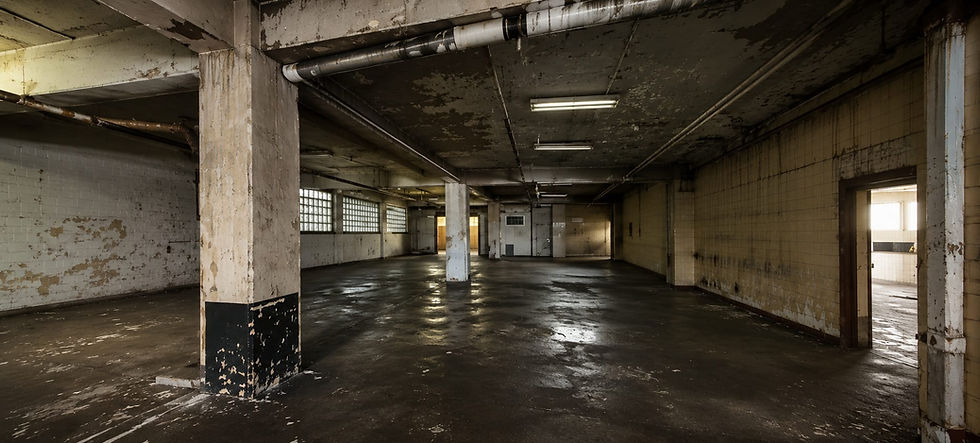
The goal was to give the former dairy plant a new future as an ice cream manufacturing facility while retaining the character that made the property special.
Rather than abandoning the building's industrial heritage, the project embraced it.
Historic Restoration Meets Modern Manufacturing
One of the most rewarding aspects of historic industrial restoration is finding ways to combine existing craftsmanship with modern functionality.
Buildings like the MFA Milk Plant were designed for a different era of manufacturing. Their original layouts, materials, and infrastructure often require careful evaluation before they can accommodate contemporary equipment and operational requirements.


The Lebanon project involved preparing a historic industrial property for renewed manufacturing use.
For SPI, the experience reinforced a simple principle: historic buildings do not have to remain frozen in time to be valuable.
With thoughtful planning and the right approach, they can continue serving productive purposes for generations.
From Dairy Processing to Ice Cream Production
In 2023, the former MFA Milk Plant began a new chapter as the home of Ice Cream Factory.


There was something particularly meaningful about returning dairy manufacturing to a facility originally constructed for that very purpose.
Although the products, equipment, and manufacturing processes had changed significantly since 1949, the building once again had an opportunity to serve the industry that shaped its history.
This type of transformation is known as adaptive reuse, the process of giving an existing building a new function while retaining its historically significant character.
Adaptive reuse can preserve important architecture, reduce unnecessary demolition, and create opportunities for communities to make productive use of existing buildings.
Recognition on the National Register of Historic Places
On April 9, 2025, the Missouri Farmers Association–Producers Creamery Company Dairy Plant was officially listed on the National Register of Historic Places.

The designation recognized the property's historical significance to Missouri's industrial and dairy heritage.
For a building that had spent years facing an uncertain future, the recognition was especially meaningful.
It also highlighted something that can be easy to overlook: historic preservation isn't limited to grand mansions, courthouses, and elaborate downtown buildings.
Factories, warehouses, mills, and agricultural processing facilities are equally important parts of America's architectural and economic history.
Their stories deserve to be preserved.

Why Historic Industrial Buildings Matter
Across the United States, thousands of older industrial buildings sit vacant or underutilized.

Many were constructed with durable materials, substantial structural systems, and architectural details that would be expensive to reproduce today.
Unfortunately, these properties are often judged mainly by their demolition costs or redevelopment obstacles.
We see something different.
We see craftsmanship, history, opportunity, and the possibility of creating something remarkable.
The MFA Milk Plant demonstrates the potential that can exist inside an aging industrial property.
Its story is also a reminder that historic restoration goes deeper than improving the appearance of a building. It is about recognizing the value of what already exists and finding a practical way to carry that value forward.
SPI Historic Restoration: Preserving Buildings Across America
At SPI Historic Restoration, historic buildings are our specialty and our passion.
As a historic restoration contractor based in Eldon, Missouri, we pursue distinctive restoration and adaptive reuse opportunities throughout the United States.
Our interests include historic factories, commercial buildings, downtown landmarks, industrial facilities, and architecturally significant properties.
We especially enjoy projects that require creative problem-solving, hands-on craftsmanship, and an appreciation for the history behind the structure.
The historic MFA Milk Plant in Lebanon is an important part of our experience and a project that reflects the direction we want to continue pursuing.
Have a historic building that deserves another chapter?
SPI Historic Restoration welcomes inquiries from property owners, developers, and organizations interested in restoring and repurposing historic properties nationwide.
SPI Historic Restoration
Based in Eldon, Missouri | Available for Projects Nationwide
Comments